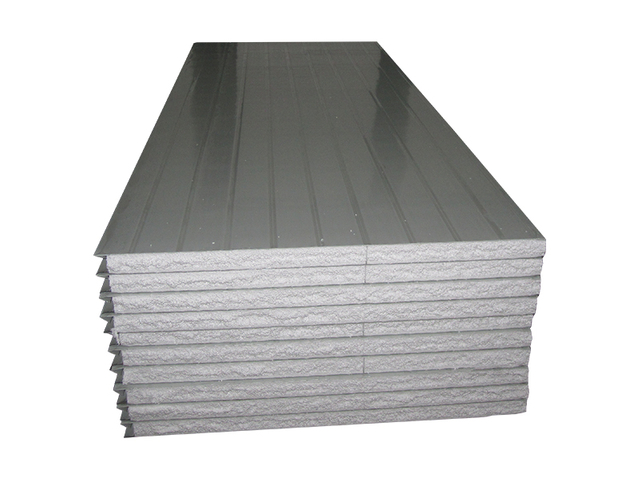
Imagine walking through a bustling industrial zone on a sweltering afternoon. Outside, the air is thick with heat and the drone of machinery, but as you step inside a building clad in our Polyurethane Sandwich Panels, the atmosphere instantly shifts. The silence is profound—the dense PU core absorbs the chaotic vibrations of the outside world, leaving only a cool, serene stillness. When you run your hand across the wall, the steel skin feels smooth and substantial, coated with a premium finish that resists the bite of corrosion and the fading power of the sun.
The inspiration for our PU panels came from a simple observation: most buildings breathe too much, leaking expensive energy through every seam. We engineered our panels to be an "architectural thermos." The core isn't just foam; it is a microscopic network of millions of closed cells, each trapping a tiny pocket of insulating gas that refuses to let heat pass. There is no chemical odor, only the clean scent of a well-regulated environment. The hidden-screw joints create a seamless, monolithic facade that looks like a single, solid piece of engineering art. This is the difference between simply having a wall and having a high-performance thermal shield that pays for itself through decades of energy savings.
The following table details the technical properties of our PU sandwich panels. These metrics are verified through rigorous laboratory testing to ensure they meet international building codes.
Our PU panels are designed to solve the most expensive problems in modern facility management: fluctuating temperatures and rising utility bills.
Market-Leading Insulation (R-Value): Polyurethane has one of the lowest thermal conductivity ratings of any building material. A 50mm PU panel provides the same insulating power as a brick wall over 1000mm thick. This allows you to maximize usable internal floor space while maintaining a "cool-box" effect that keeps your energy meters spinning slower.
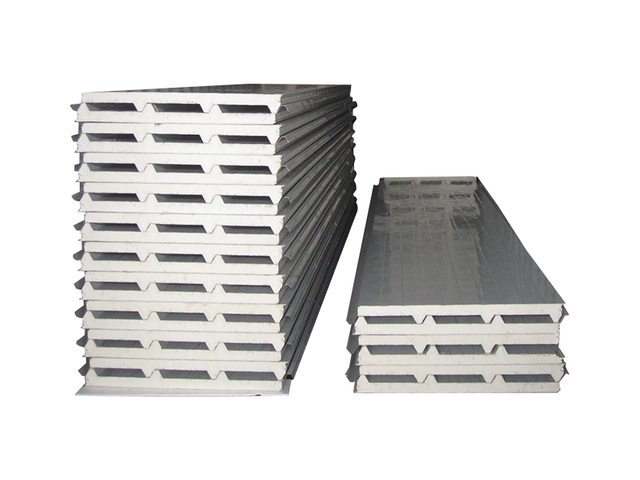
Exceptional Structural Rigidity: The sandwich construction—bonding two high-strength steel skins to a rigid foam core—creates a composite material with an incredible strength-to-weight ratio. These panels can span longer distances with fewer secondary supports, reducing your overall steel structure costs.
Moisture and Mold Resistance: Because our PU foam has a closed-cell rate exceeding 95%, it is virtually hydrophobic. It does not absorb water, meaning it won't sag, lose its insulating properties, or become a breeding ground for mold and bacteria, even in high-humidity food processing environments.
The Science of Polyurethane Insulation
To maintain the highest level of expertise (E-E-A-T), we focus on the molecular stability of our insulation. Not all foams are created equal, and our production process ensures a consistent "lambda" value across every square meter.
Controlled Reaction & Density: Our continuous double-belt production line ensures that the polyol and isocyanate react under precise pressure and temperature. This prevents the formation of large air pockets (voids) that can compromise thermal performance. By maintaining a density of 40kg/m³, we achieve the perfect balance between thermal resistance and mechanical compressive strength.
Long-Term Dimensional Stability: Cheaper panels often "gas out" or shrink over time, leading to gaps at the joints. Our PU formula is stabilized to ensure that the panels remain dimensionally accurate for over 30 years. This means the airtight seal you have on day one remains just as effective on day 10,000, protecting your HVAC systems from working overtime to compensate for leaks.
Versatile Architectural & Industrial Applications
The adaptability of our Polyurethane Wall Panels allows them to be the primary choice for diverse and demanding global projects.
Cold Chain & Food Processing: Essential for walk-in freezers, slaughterhouses, and fruit storage. The easy-to-clean surface and superior insulation prevent temperature "spikes" that can ruin sensitive inventory.
Pharmaceutical & Cleanroom Environments: Our "hidden-fix" panels provide a flat, protrusion-free surface that minimizes dust accumulation and facilitates rigorous sterilization protocols required in vaccine and electronics manufacturing.
Logistics & Warehousing: Ideal for large-scale distribution centers. The rapid installation of these panels means you can enclose a 10,000-square-meter facility in weeks rather than months, accelerating your return on investment.
Modern Commercial Facades: With customized colors and textures (like wood grain or metallic silver), architects use our panels to create sleek, contemporary offices and showrooms that look high-end but remain cost-effective.
Installation Integrity & Structural Durability
A sandwich panel is only as good as its joint. We focus on the "human element" of construction—making the installation so intuitive that errors are virtually eliminated.
Interlocking Joint Precision: Our panels feature a sophisticated tongue-and-groove system. When two panels meet, they "click" into place with a satisfying mechanical fit. This ensures that the insulation core is continuous, with no "cold bridges" where energy can escape.
Internal Reinforcement: For high-wind areas or tall buildings, we offer panels with internal steel reinforcements at the fixing points. This prevents "pull-through" failures during storms and ensures the facade remains securely anchored to the building's skeleton.
Integrated Flashing & Trim: We provide a complete ecosystem of color-matched corners, base channels, and drip-caps. This ensures that every edge of your building is protected from the elements and has a polished, professional finish that lasts for decades.
Why Partner With Our Insulated Solutions
In a market saturated with low-quality foam boards, our reputation is built on technical transparency and a commitment to your building's lifecycle.
Rigorous Quality Audits: Every production run is sampled for density, bond strength, and fire resistance. We provide a comprehensive Test Report and Mill Certificate with every shipment, so your project inspectors have all the data they need for compliance.
Global Logistics Expertise: Shipping high-volume, lightweight panels requires specialized loading to prevent "panel crush." We use customized wooden crates and foam spacers, ensuring that the panels you receive at the site are as pristine as they were when they left the factory.
Environmental Responsibility: Our PU foam is 100% CFC and HCFC-free, meaning it has zero Ozone Depletion Potential (ODP). By choosing our panels, you are qualifying your project for green building certifications (like LEED or BREEAM) and contributing to a more sustainable future.
Frequently Asked Questions
What is the difference between PU and PIR sandwich panels?
PU (Polyurethane) is an excellent insulator, while PIR (Polyisocyanurate) is an enhanced version with even better fire resistance. PIR can withstand higher temperatures and is often required by insurance companies for large industrial facilities due to its superior charring properties during a fire.
How do I choose the right thickness for my wall?
Thickness depends on your target interior temperature and local climate. For standard industrial warehouses, 50mm or 75mm is common. For cold storage or freezers, you typically need 100mm to 200mm to prevent the refrigeration units from overworking.
Can these panels be used for both interior and exterior walls?
Absolutely. Our panels are designed with weather-resistant exterior skins for facades and hygienic, easy-to-clean interior skins for partitions. They are versatile enough to serve as the entire building envelope.
How do you prevent water from entering the joints?
Our tongue-and-groove system is designed with a built-in "capillary groove" that prevents water from being sucked into the joint. Additionally, for high-moisture environments, a simple bead of silicone sealant can be applied within the joint during assembly for a 100% airtight and watertight seal.