Choosing the right dimensions for your construction project isn't just about making it fit; it’s about structural integrity, cost-efficiency, and minimizing waste. If you are asking "What size do corrugated metal sheets come in?", you are likely navigating the balance between standard stock and custom industrial requirements.
While these sheets are incredibly versatile, the market follows specific dimensional norms. Understanding these standards helps you calculate load-bearing capacities and overlap requirements accurately. In this guide, we dive deep into the widths, lengths, and thicknesses available for corrugated metal sheets to help you make an informed procurement decision.
Standard Widths of Corrugated Metal Sheets
When discussing the width of corrugated metal sheets, we must distinguish between "overall width" and "covered width." The overall width is the measurement from edge to edge. However, because these panels must overlap to stay watertight, the covered width (the actual surface area it hides) is usually 2 to 6 inches less.
Most industrial corrugated metal sheets come in standard overall widths of 26, 36, or 39 inches. The 36-inch width is the most common "workhorse" in the industry. It offers a perfect balance—it’s wide enough to cover large areas quickly but narrow enough for a single worker to handle safely.
Why Width Varies by Profile
The "pitch" (the distance between peaks) and the "depth" (the height of the wave) dictate the final width. A deeper rib often results in a narrower finished sheet because more material is "used up" in the height of the corrugation. For example, a heavy-duty corrosion resistant corrugated metal sheet with high ribs might have a narrower effective coverage than a shallow-wave decorative panel.
| Profile Type | Overall Width | Coverage Width | Common Use |
| Standard S-Panel | 26 inches | 24 inches | Residential roofing |
| Industrial Box Rib | 36 inches | 32-34 inches | Warehouses/Factories |
| Wide Span Panels | 39-42 inches | 36-38 inches | Large agricultural sheds |
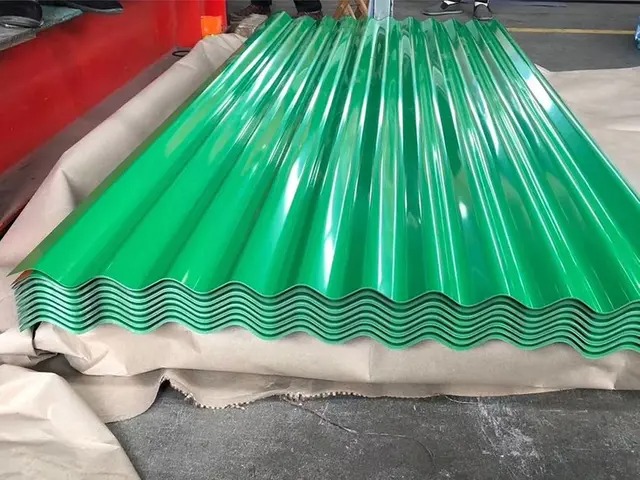
Standard and Custom Lengths for Every Project
Length is where corrugated metal sheets offer the most flexibility. Unlike width, which is limited by the rolling machine's die, length is only limited by transportation constraints.
Off-the-Shelf vs. Custom Cut
If you visit a local hardware store, you will typically find galvanized corrugated metal sheets in "stock lengths" of 8, 10, and 12 feet. These are easy to transport in a standard pickup truck and work well for small sheds or DIY fencing.
However, for large-scale projects, we often manufacture roofing corrugated metal sheets in much longer spans. It is common to see panels reaching 20, 30, or even 40 feet. Using long, continuous sheets reduces the number of end-laps (where two sheets meet vertically), which is the most common point of leakage in a roofing system.
Transportation Logistics
While we can technically produce a sheet that is 60 feet long, shipping it becomes a nightmare. Most international shipping containers (40ft HQ) limit the practical length of pre painted corrugated metal sheets to around 11.8 meters (approx. 38.7 feet) to allow for packaging and loading clearance. If your project requires longer spans, you might consider on-site roll forming, though this is significantly more expensive than factory-direct shipping.
Understanding Gauges and Thickness
Thickness in the metal world is usually measured by "gauge." This can be confusing because a higher gauge number actually means a thinner sheet. For corrugated metal sheets, the thickness determines how far the "span" can be between support purlins.
Common Gauge Ranges
29 to 26 Gauge: These are the standards for residential and light commercial roofing corrugated metal sheets. They are lightweight and cost-effective.
24 to 22 Gauge: This is the "architectural grade." These industrial corrugated metal sheets are thicker, offer better wind resistance, and are less likely to "oil can" (visible waviness in the flat areas of the metal).
20 Gauge and Thicker: Reserved for heavy industrial corrugated metal sheets or floor decking where the metal must support the weight of wet concrete.
Thickness Comparison Table (Approximate)
| Gauge | Thickness (Inches) | Thickness (mm) | Best For |
| 29 | 0.014" | 0.36mm | Budget-friendly sheds |
| 26 | 0.018" | 0.45mm | Standard residential roofs |
| 24 | 0.024" | 0.60mm | High-end commercial builds |
| 22 | 0.030" | 0.76mm | High-wind/Snow load areas |
Choosing a corrosion resistant corrugated metal sheet in a thicker gauge ensures the structure remains sound even if the environment is harsh. Thinner sheets might be cheaper upfront, but they dent easily under hail or during maintenance walks.
Depth and Pitch: The "Third Dimension" of Size
When you ask about size, you aren't just asking about length and width. The "profile" of the wave—specifically the depth and the pitch—is a critical sizing component.
Why Profile Dimensions Matter
The profile height provides the "stiffness" of the sheet. Think of it like a piece of paper: if you hold it flat, it flops. If you fold it into an accordion shape, it becomes rigid.
Low Profile (1/2" to 3/4" depth): These are common for galvanized corrugated metal sheets used in siding or small backyard projects. They are subtle and easy to overlap.
High Profile (1-1/4" to 7/8" or more): These are the kings of the industrial corrugated metal sheets world. The higher the rib, the more water the "valley" can carry away during a heavy storm.
Measuring the Pitch
The "pitch" is the distance between the center of one crest to the center of the next. A common sizing is "2.67 x 1/2," which means the peaks are 2.67 inches apart and the waves are 1/2 inch high. Understanding these specific numbers is vital when you are trying to match old corrugated metal sheets during a renovation. If the pitch is even slightly off, the new sheets will not nest properly with the old ones, leading to gaps and leaks.
How Coating and Material Affect Final Dimensions
The material you choose—whether it is steel, aluminum, or stainless—affects the available sizes. Most pre painted corrugated metal sheets are made from galvanized steel, but the thickness of the coating adds a tiny fraction to the overall dimension.
Galvanization and Painting
A galvanized corrugated metal sheet has a layer of zinc protecting the steel core. While this doesn't drastically change the width, it does impact the weight per square foot. Similarly, pre painted corrugated metal sheets have a primer and a topcoat (often PVDF or PE paint). These coatings are measured in microns, but they are essential for calculating the total "thickness" if you are working with precision engineering tolerances.
Material Weight Considerations
Size is inextricably linked to weight. If you order a 40-foot industrial corrugated metal sheet in 22-gauge steel, it will be incredibly heavy. You must ensure your structure can handle the "dead load" of the material.
Steel: Heavy, strong, and the industry standard.
Aluminum: Much lighter, allowing for larger sheets with less structural strain, but more expensive.
Stainless Steel: The ultimate corrosion resistant corrugated metal sheet, though usually restricted to smaller sizes due to cost and weight.
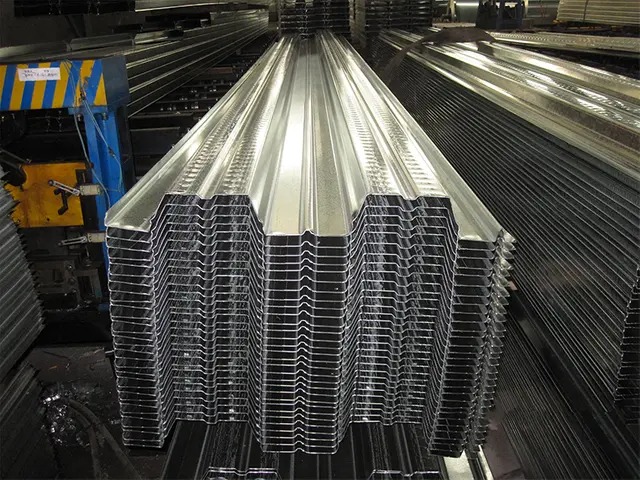
Regional Standard Variations (Metric vs. Imperial)
Size availability often depends on where you are buying. In North America, imperial units (inches/feet) dominate. In the rest of the world, metric measurements (mm/meters) are the standard.
Standard Metric Sizes
In many international markets, corrugated metal sheets are sold in widths of 1000mm or 1200mm. The length is often cut to the exact centimeter requested by the client. For a B2B buyer, it is crucial to clarify which measurement system your manufacturer uses. A 1000mm sheet is roughly 39.37 inches, which will not align perfectly with a 36-inch American grid system.
The Role of Tolerance
No sheet is perfectly 10 feet long. There is always a "manufacturing tolerance." Usually, this is within +/- 1/8 of an inch. When ordering pre painted corrugated metal sheets for a tight architectural fit, always ask the supplier for their tolerance specs. This prevents "creep," where a tiny error in each sheet's width adds up to a foot-long mistake by the end of a long wall.
Conclusion: Finding the Right Fit
Determining what size do corrugated metal sheets come in depends entirely on the application. For a simple backyard shed, standard 26-inch wide by 8-foot long galvanized corrugated metal sheets are perfect. For a massive industrial warehouse, you'll likely need 36-inch wide pre painted corrugated metal sheets custom-cut to 35-foot lengths to minimize seams.
Always prioritize coverage width over overall width when calculating how many sheets to buy. Don't forget to account for the thickness (gauge) to ensure your roof doesn't sag under pressure. By understanding these dimensions, you ensure your project is durable, weather-tight, and visually professional.
FAQ
Q: Can I cut corrugated metal sheets to a custom size myself?
A: Yes, they can be cut using a circular saw with a metal-cutting blade, nibblers, or tin snips. However, for pre painted corrugated metal sheets, factory-cut edges are better because they are treated to prevent rust.
Q: How much overlap do I need for corrugated roofing?
A: Typically, you should allow for at least one full corrugation for side laps (about 2-3 inches) and 6 inches for end laps (vertical overlaps). In high-wind areas, two corrugations for side laps are recommended.
Q: Are there maximum length limits for shipping?
A: Yes. For standard ocean freight, the limit is usually around 11.8 meters (38.7 feet) to fit inside a 40ft container. For domestic trucking, lengths up to 45-53 feet are possible but may require "oversize" permits.
About Sukalp: Your B2B Partner in Steel Excellence
At Sukalp, we understand that in the B2B world, precision is everything. We are not just a supplier; we are a dedicated manufacturer with a robust factory infrastructure designed to meet high-volume industrial demands. We specialize in producing top-tier corrugated metal sheets, including galvanized, pre painted, and corrosion resistant options tailored to your exact specifications.
Our strength lies in our ability to provide customized sizing solutions that go beyond the "standard" hardware store offerings. We operate advanced roll-forming lines that allow us to maintain strict tolerances, ensuring that every batch of industrial corrugated metal sheets we ship meets your structural requirements. Whether you are a large-scale contractor or a regional distributor, we offer the scale, the technical expertise, and the B2B logistics support to keep your projects moving on time and under budget. We take pride in our "factory-direct" approach, which eliminates middlemen and ensures that our clients receive the best possible value for high-performance steel products.